Spices for pasta: what to add without masking the other flavors
Hello, Claude here. To lift your pasta without masking its flavor, go with basil, oregano, and garlic, with a pinch of mild paprika if you want a bit more character.
The secret mainly lies in measurement: herbs should accompany the sauce or the pasta, not take up all the space. A balanced seasoning starts with a small amount, then is adjusted after tasting.
The right habits to adopt
- Add a drizzle of olive oil after draining to help the aromatics cling.
- Choose fresh basil for a fresh, fragrant herbal note.
- Use oregano with tomato sauce, just a pinch.
- Incorporate finely chopped garlic at the end of cooking to preserve its sweetness.
- Keep mild paprika, black pepper, thyme, and nutmeg to a light amount, according to the recipe.
To vary without weighing down the dish, you can also consult these tips on the discreet spices that elevate pasta and this method for flavoring pasta without a heavy sauce.
Which spices for pasta according to the sauce?
The common mistake is to use several powerful aromatics at the same time. A tomato sauce gladly welcomes oregano and basil, while pasta simply tossed with olive oil benefits from staying more subdued.
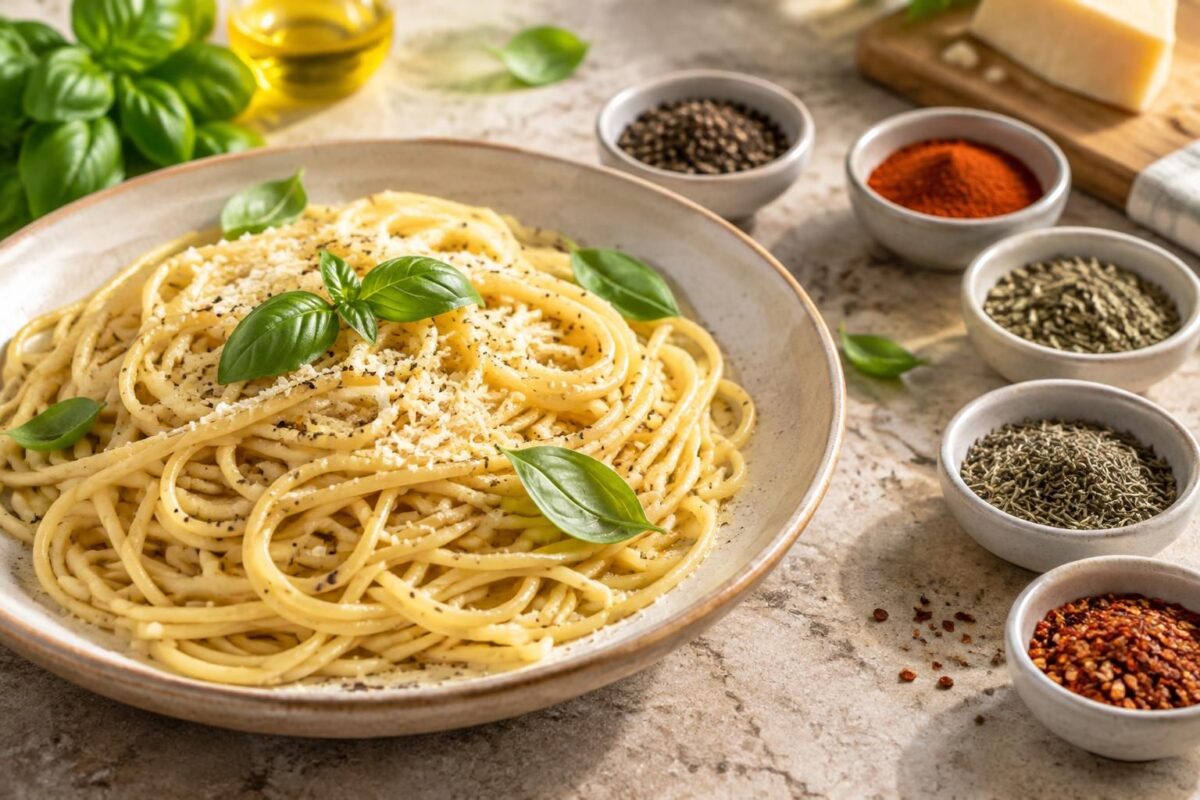
For example, for a plate of spaghetti without sauce, start with garlic and basil. If you’re making a creamy sauce, a hint of black pepper or nutmeg is often enough to provide depth without overpowering the other ingredients.
| Spice or herb | Flavor profile | When to add |
|---|---|---|
| Basil | Fresh and slightly minty | At the end, preferably fresh |
| Oregano | Herbaceous and slightly peppery | In a tomato sauce or on hot pasta |
| Garlic | Fresh mild, more intense in powder | At the end of cooking or just after draining |
| Thyme | Woody and aromatic | In small amounts in a simmered sauce |
| Black pepper | Warm and pungent | Freshly ground, at serving time |
| Nutmeg | Warm and fragrant | A pinch in a creamy sauce |
| Sweet paprika | Round and slightly piquant | A pinch to lift without dominating |
Cumin or curry can also work for a recipe with a different inspiration, but their strong aroma clearly changes the dish’s profile. To keep pasta flavor in the foreground, test them in minimal amounts rather than adding them directly to the entire preparation.
Spice dosage: a simple three-step method
The right spice dosage depends on the sauce, the amount of pasta, and the strength of the aromatics. It’s best to proceed gradually: a pinch can be corrected easily, whereas an excess is hard to fix.
- Start light. For two servings, first add a small pinch of oregano or mild paprika, then mix.
- Add the herbs at the right moment. Add fresh herbs when the pasta is drained and still hot, off the heat.
- Taste before finishing. Adjust with a little black pepper, garlic, or salt only if the dish needs it.
This progression works just as well with plain pasta as with a sauce. Dried spices can infuse for a few moments in a hot sauce, while fresh herbs benefit from being added at the last moment.
Simple pairings to keep the balance
For tomato pasta, pair basil and oregano, then taste before adding pepper. With pasta cooked in butter or oil, garlic and parsley bring freshness without multiplying the flavors.
For a creamy sauce, stay with a touch of nutmeg and a bit of black pepper. The rule is simple: if you can no longer distinguish the sauce from the main ingredients, reduce the number of aromatics next time.
When to add spices to pasta?
Add fresh herbs after draining the pasta, while it is still hot. Dried spices can be incorporated into the sauce while it heats.
Which spices to choose for pasta without sauce?
Basil, garlic, and a small touch of oregano work well. A drizzle of olive oil helps distribute the aromatics.
Are cumin or curry suitable for pasta?
They can add an original note, but their aroma is strong. Start with a very small amount to avoid them dominating the dish.
Should you choose fresh or dried herbs?
Fresh herbs give a livelier finish. Dried herbs are handy in sauces, provided you dose them with restraint.
Thanks for reading! Don’t hesitate to share your observations in the comments. — Claude